
No. 03
Sterling Silver & Silverplate
in Pompano Beach
Flatware, hollowware, and tea services.
Silver with the right mark, the right maker or the right construction can sell for well above its weight in metal, and silver that only looks the part can sell for far less. This guide explains how fineness standards and hallmarks separate Britannia, sterling and coin silver, how Gorham, Tiffany, Kirk and Georg Jensen marks date a piece, how to tell plate and filled hollowware from solid silver, and what isotope research says about where silver was mined. Written for Pompano Beach and Broward County estates.
What we look for
- Full and partial flatware services
- Hollowware: trays, bowls, candelabra, tea sets
- Tiffany, Gorham, Reed & Barton, and English hallmarks
- Sterling and quality silverplate
Standards and marks: what the stamps tell you
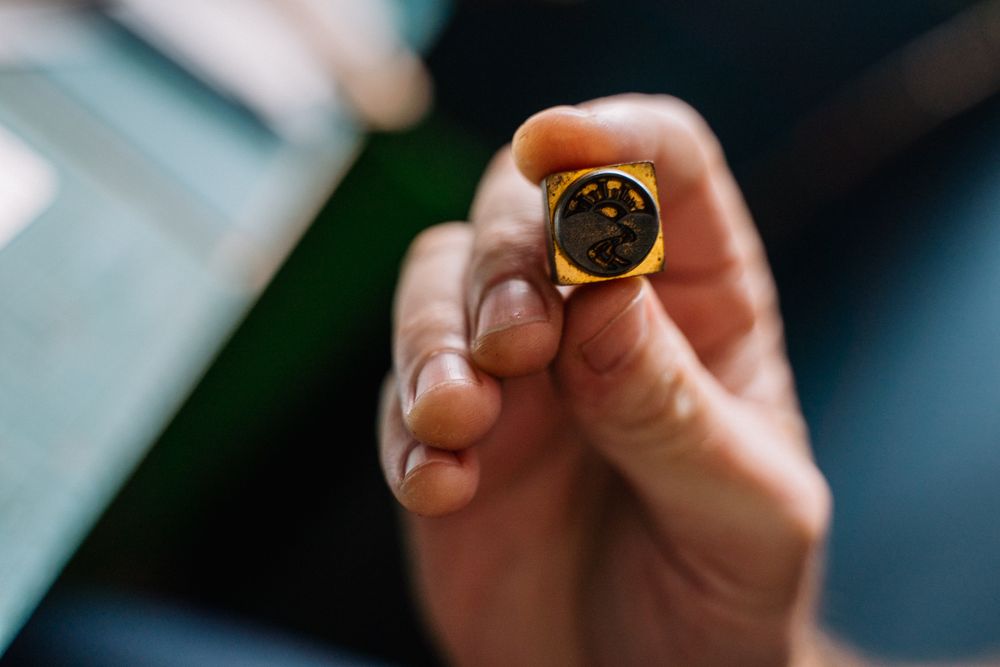
Three fineness figures sort most silver. Sterling is 925 parts per thousand. Britannia silver is 958.4, compulsory for English wrought plate from 30 May 1697 to 1 June 1720 to stop coin clipping; after 1720 makers could choose either standard, so Britannia pieces turn up later too. A seated Britannia replaced the lion passant, and a lion's head erased replaced the leopard's head. The extra silver is about 3.6 percent by weight, so collectors pay for age and maker, not for that margin. In the United States, 16 CFR 23.5 reserves "sterling" for 925 or better and "coin silver" for 900 or better.
A full English hallmark has a maker's mark, a standard mark, an assay office mark and a date letter. London's letter cycles ran 20 years, using a to u or v and skipping j, w, x, y and z. Each assay office kept its own cycle until 1975, so one letter means different years in different cities.
American marks are looser, which is why makers matter:
- Gorham (Providence, founded 1831) adopted the 925 standard in 1868 and began year marks: letters A to Q for 1868 to 1884, then a different symbol each year to 1933. The same system appears on Gorham silver plate, so a date mark alone is not proof of silver. Look for STERLING.
- Tiffany & Co. silver was made by outside firms before the Moore silverworks joined in 1868. Until about 1868 the Tiffany stamp can appear beside the real maker's mark, such as Gorham or Grosjean & Woodward.
- Kirk (Baltimore, from 1815) is known for repoussé "Baltimore silver". Marks read S. Kirk & Son until Stieff bought the firm in 1979 and Kirk Stieff followed, so the stamp shows which era you hold.
- Georg Jensen used .830 on much early work and, per dealer sources, moved to 925S in 1927. Danish pieces carry the three-towers control mark, and a 1933-1944 hallmark is a recognized dating window.
Plate, filled or solid: what is under the surface
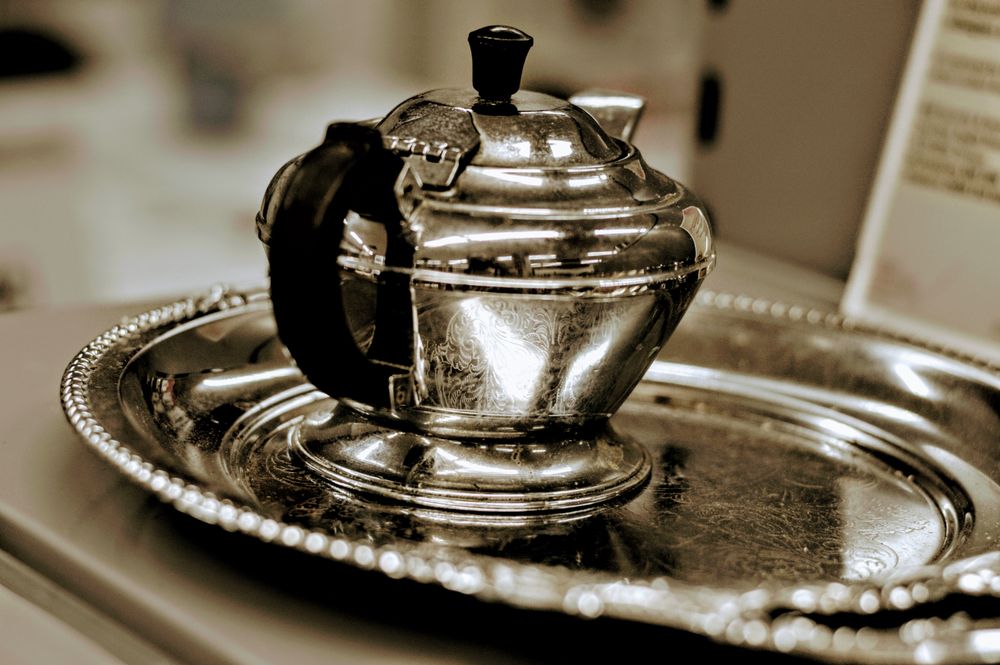
Old Sheffield plate was developed by Thomas Boulsover in the 1740s: a thin silver sheet fused onto a thick copper ingot by heat, then rolled and shaped. Electroplating, such as George Elkington's process, generally replaced it after about 1840. Soldered joints are a hallmark of the fused method, and from about 1790 makers hid exposed copper at borders with U-shaped silver wire. Electroplate is deposited on a finished body, so seams are usually filled in. Worn high points on either type can show copper, so copper alone settles nothing, and early 1900s reproductions seldom carry a maker's mark. Collectors also check handles and feet: Sheffield plate parts are commonly two stamped halves soldered together and filled with lead. A "Sheffield" stamp names the city, not the method, and EPNS means electroplated nickel silver. Neither is sterling, and neither is melt silver. Value comes from maker, form and condition.
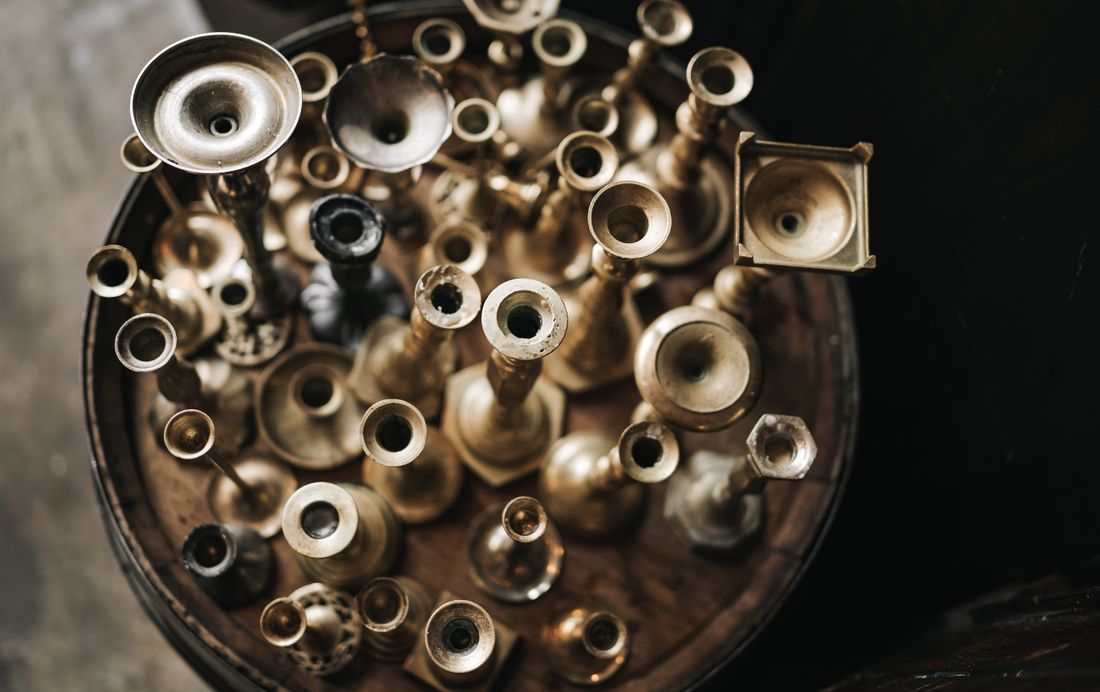
Weighted hollowware is a different trap, because the outer shell can be genuine sterling. Filled candlesticks are sheet-metal shells packed mostly with pitch, topped with plaster at the base and covered with baize. Cast candlesticks are solid. A heavy feel proves little, and the shell can be thin, so a tall stick may hold far less silver than its size suggests. Some pieces say "weighted" or "reinforced" on the base, but a missing stamp does not prove a stick is hollow. Hollow-handled table knives are commonly built the same way. Do not cut or soak a piece to test it.
Imaging can look inside without damage. X-radiography shows internal structure but cannot name the metals, which takes XRF or similar analysis (Historical Metallurgy Society datasheet 14). One preprint shows why this matters: a coin long accepted as 4th-century BC south Italian silver turned out to be a lead core with an inner copper layer and an outer silver layer (Giovannelli et al., arXiv:cond-mat/0603438). The surface said silver. The core said otherwise.
Isotope fingerprints: where the silver came from
Lead occurs with silver in many ores, and its isotope ratios act as a fingerprint of the mining district. Ratios alone can overlap between districts, so researchers pair them with trace-element data such as gold, lead and bismuth. Older solution methods need a piece sampled and chemically prepared, while laser ablation reads a tiny spot on the object. Two peer-reviewed studies show what the method can do.
- Standish, Merkel, Hsieh and Kershaw (Journal of Archaeological Science, online December 2020, DOI 10.1016/j.jas.2020.105299) built a laser-ablation MC-ICP-MS method that measures lead isotope ratios and gold, lead and bismuth concentrations in metallic silver in one pass. Internal precision on the 207Pb/206Pb and 208Pb/206Pb ratios was below 0.03 percent, and external reproducibility over ten months was below 0.4 percent for the 204Pb-normalized ratios. They checked it against seven silver reference materials and applied it to Islamic dirhams from the al-Muhammadiyya mint.
- Desaulty, Telouk, Albalat and Albarède (PNAS 108, 2011, DOI 10.1073/pnas.1018210108) measured silver, copper and lead isotopes in 91 coins. Pre-1492 European silver could be told apart from Mexican and Andean silver, and Spanish coinage shifted from European sources toward Mexican silver by the reign of Philip V.
These are research methods, run on ancient coin and bullion. They do not price a flatware service, and a lab will not see your drawer. At a Pompano Beach kitchen table the working checks are practical: read the marks, test the construction, weigh each piece, and separate sterling from plate and weighted items before anyone quotes a figure. A condo clearance in Broward often mixes all three in one canteen, so sort by stamp first. Isotope work asks where an old ore was mined. It cannot tell you who made a spoon, and for most estate silver the maker's mark answers that faster and for free.
Not sure if your piece fits? Text a photo to (561) 465-3536 — we will tell you honestly and for free, with no obligation to sell.
Questions
Selling sterling silver & silverplate in Pompano Beach
I inherited a Gorham service in Pompano Beach. Is it sterling or plate?
Look for STERLING stamped on the back. Gorham used the same year-mark system on silver plate, so a date mark alone proves nothing. Under 16 CFR 23.5, "sterling" means at least 925 parts per thousand. Bring the service, or photos of the marks, and we will sort sterling from plate before quoting.
Are weighted sterling candlesticks worth anything?
Yes, but usually less than solid ones. The shell is sterling, while the inside is typically pitch with a plaster base, so the silver content is only the thin shell. A good maker or a rare pattern can still carry value as a collectible. Please do not cut or soak them.
An English piece in my Broward estate shows a seated figure and a lion's head. Is it special?
That pairing is the Britannia standard mark, 958.4 parts silver instead of 925. It was compulsory in England from 1697 to 1720, but later makers could use it too, so the date letter matters. The extra silver is about 3.6 percent. Age and maker drive any premium.
How do I date Georg Jensen silver from a Pompano estate?
Start with the marks. Danish pieces carry the three-towers control mark, early work was often .830, and dealer sources date the move to 925S at 1927. A 1933-1944 hallmark is a known window. Because early marks were reused, send clear photos of every stamp and we will help narrow it down.
Does Florida make a dealer wait before reselling silver bought from me?
Under Florida Statutes 538.06, a secondhand dealer generally may not sell or alter precious metals, jewelry or antiques for 30 calendar days after acquiring them. The hold is generally understood to give police time to trace stolen goods. This is general information, not legal advice, so confirm details with the Florida statutes.
We also buy