
No. 04
Porcelain, China & Glass
in Pompano Beach
Meissen, Limoges, Lalique, and art glass.
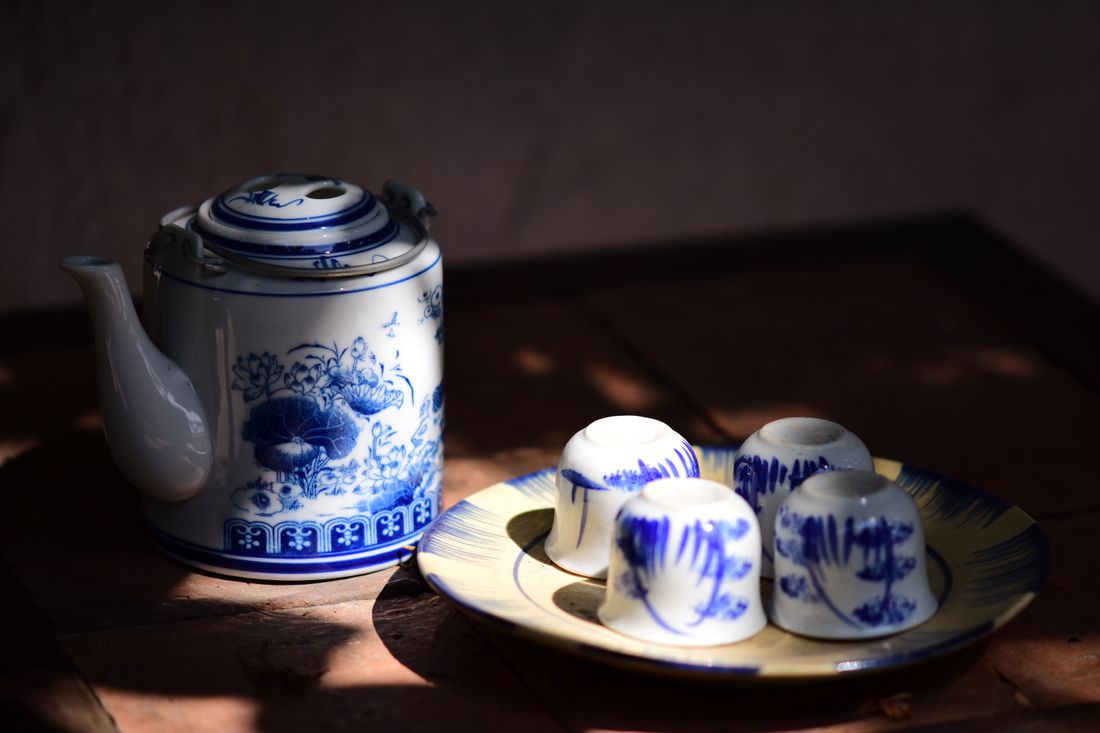
A dinner service in a Pompano Beach china cabinet carries more evidence than its pattern name. The paste, the backstamp, the glaze and the glow under a UV lamp each say something different about maker, date and repair history. This guide draws on museum conservation notes, tariff law and peer-reviewed lab work to show what each clue proves, and what it cannot, before anyone in Broward County puts a number on inherited porcelain or glass.
What we look for
- Meissen, Limoges, Royal Doulton, and marked makers
- Chinese and Japanese porcelain
- Lalique, Baccarat, and cameo / art glass
- Dinner services and figural pieces
Paste, bone ash and the chemistry behind a chip
"Porcelain" covers three different bodies. True hard-paste is kaolin plus petuntse (china stone, a feldspathic rock), fired near 1,450 °C so the stone vitrifies while the kaolin holds the shape. European soft-paste imitated it with clay and ground glass at roughly 1,200 °C. Bone china adds bone ash: Thomas Frye's Bow works used up to about 45% from the 1740s, and Josiah Spode fixed the classic English mix in the 1790s, traditionally 6 parts bone ash, 4 china stone and 3.5 kaolin.
The bench tests follow from that chemistry. Rest a plate on your fingertips and flick the rim: hard-paste rings high and clear, soft-paste gives a dull clunk. A fresh chip of hard-paste looks glassy and smooth, while soft-paste breaks granular and chalky, and a file bites into soft-paste but barely marks hard-paste (never file anything you plan to sell). Bone china fractures much like hard-paste and has an ivory tone, so a chip alone cannot separate the two.
Short-wave UV adds a body test. The US National Park Service reports that hard-paste glows a dim pink while soft-paste looks milky white. That lamp can injure eyes and skin, so it belongs in a conservator's hands, not a kitchen.
Labs go further, fingerprinting the clay itself. Speakman and colleagues (Journal of Archaeological Science, 2011, doi:10.1016/j.jas.2011.08.011) measured 75 Mimbres and Jornada sherds by neutron activation (INAA) and by handheld portable XRF. On the elements both methods share, the two built similar compositional groups, but pXRF separated groups less cleanly because it sees fewer discriminating elements and is less precise on intact, uneven surfaces. More recently, arXiv:2506.12250 (Capriotti et al., 2025) trained neural networks on 1,424 thin-section images from 178 Levantine sherds, and a ResNet18 model sorted petrographic fabrics with 92.11% accuracy. Both studies used archaeological pottery rather than tableware, but the principle carries over: different clay beds and recipes leave different chemical and mineral signatures.
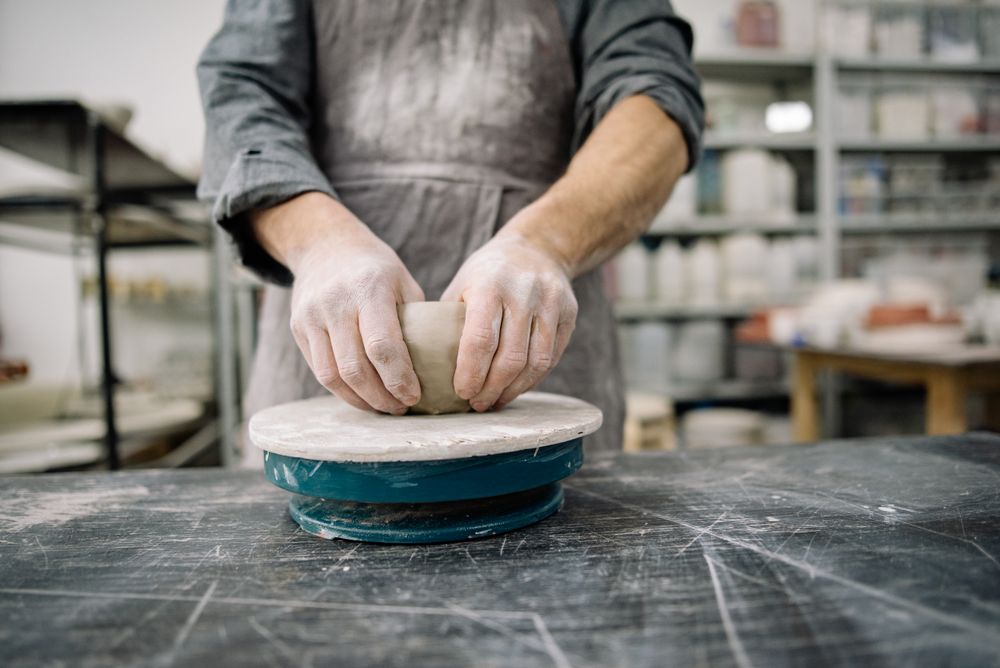
Backstamps: what the marks date, and what they cannot prove
Meissen's crossed swords come from the Saxon electoral arms. Sources date their adoption to 1720 or 1722; a decree made them standard from 1731, and the factory registered them as a trademark on 20 May 1875. Variants help date a piece: a dot between the hilts around 1763 to 1773, a star between the hilts in the Marcolini period (Count Camillo Marcolini directed the works from 1774 to 1813), a dot between the blade tips from 1924 to 1934, an arc joining the blades from 1945 to 1947, and a date sign pressed into the base from 1948. Ground lines cut through the swords flag second-quality ware.
A mark is also the easiest thing to copy. Eighteenth-century Meissen marks were applied carelessly, and collectors report look-alike swords from other makers. Genuine swords are normally underglaze blue, so a mark sitting on top of the glaze, or one that looks altered, deserves suspicion. Judge the potting and painting first, then the mark.
Country-of-origin words give a different clock. Section 6 of the McKinley Tariff Act (1890) required imports usually marked to show their country of origin in legible English from 1 March 1891. It asked for the country name, not the phrase "Made in"; that wording traces to Britain's Merchandise Marks Act of 1887. So "Nippon" fits roughly 1891 to 1921, plain "Japan" comes later, "Occupied Japan" means 1945 to 1952, and "West Germany" means 1949 to 1990. A bare "France" proves little because it is also the French word, and a missing country name does not prove an early date, since the rule covered US imports only.
Glass signatures need the same caution. Samuel Provost's 2017 Journal of Glass Studies paper dates Gallé's star signature, adopted by the widow Henriette Gallé for posthumous output, to 1905 to 1908 rather than the long-assumed 1904 to 1906. A star placed to the right of the name is very rare and probably forged, and dealers removed stars in the 1960s and 1970s, so an unstarred signature settles nothing. On Lalique, early pieces lack "France", post-war pieces often carry an engraved "Lalique France", and forgers add an "R." to post-1945 or copy pieces. One collector site notes that signatures are usually easier to fake than the pieces themselves.
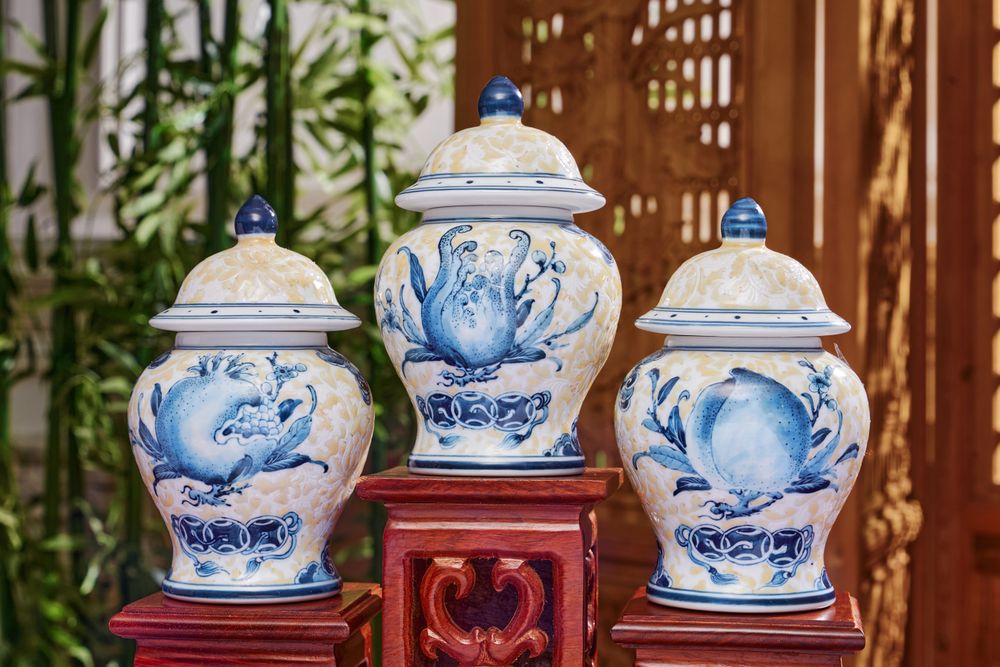
Under the lamp: repairs, crazing, lead and crystal
Long-wave UV (about 365 nm) is a repair detector. The Park Service's Conserve O Gram 1/10 lists the glows: epoxy bright yellowish white, shellac bright orange, PVA bluish milky, cellulose nitrate greenish yellow, and fills that often fluoresce against the dark body. Acryloid B72, a conservator's staple, stays dark, so a clean result never clears a piece. At Winterthur, UV helped expose aged coatings and misleading overpaint on restored porcelain urns.
Crazing is a stress problem. A glaze held in tension can crack, and in porous earthenware a tiny moisture expansion of the body can push a marginal glaze past its limit, so "delayed crazing" may appear weeks, months or years after firing; thermal shock from cold liquids adds to it. South Florida's humidity is the setting where that matters, though dense hard-paste porcelain is far less exposed. Cracks also matter for safety, because the CDC notes that chips and cracks let lead leach from ceramic ware. Sheets and Turpen (1997) found pre-1943 US orange-glazed dishes releasing up to 350 micrograms of lead per millilitre in a vinegar-strength test, against an FDA limit of 3, which is why old tableware is safest as display.
For glass, EU Directive 69/493/EEC reserves "lead crystal" for glass with at least 24% lead oxide and a density of at least 2.90 (full lead crystal: 30% and 3.00), above ordinary soda-lime glass at about 2.5 g/cm3. A real lead piece therefore feels heavy for its size and rings longer when flicked. The Park Service notes lead glass shows little fluorescence under long-wave UV but a striking icy blue under short-wave, while uranium glass glows bright yellow-green under long-wave. Serve from lead crystal decanters, but do not store drinks in them: McGill's Office for Science and Society cites port rising from about 90 to 4,000 micrograms per litre of lead in four months.
Not sure if your piece fits? Text a photo to (561) 465-3536 — we will tell you honestly and for free, with no obligation to sell.
Questions
Selling porcelain, china & glass in Pompano Beach
I inherited a Noritake set in Pompano Beach marked "Nippon." How old is it?
A "Nippon" backstamp points to roughly 1891 to 1921, because US customs stopped accepting it in 1921 and required the English country name. "Occupied Japan" means 1945 to 1952, and plain "Japan" is ambiguous. Maker and pattern then drive value, so send photos of the backstamp and a full place setting.
Is my grandmother's china from Broward County safe to eat from?
Not automatically. In a 1998 study of 46 imported porcelain dishes made before the mid-1970s, including Haviland Limoges, Rosenthal and Noritake, 23 leached lead above the FDA limit in a 24-hour vinegar-strength test, and every dish carried over-glaze decoration. Treat gilded or hand-painted heirlooms as display pieces unless tested.
Will South Florida humidity craze my china, and does it hurt value?
Crazing comes from stress between glaze and body. In porous earthenware, small moisture uptake can push a marginal glaze past its limit, sometimes years after firing; dense porcelain is far less prone. Buyers treat crazing as a condition issue, so photograph it in raking light and disclose it when you sell.
How can I tell if a Gallé vase from a Pompano estate is genuine?
Start with the star. A star before the name belongs to the posthumous 1905 to 1908 production, and one to the right of the name is very rare and probably forged. Dealers also removed stars in the 1960s and 1970s, so an unstarred signature proves little alone. Send photos of the signature in raking light and the cameo layers.
Can I test lead crystal at home in Pompano Beach?
Try weight, ring and a UV lamp. In the EU, "lead crystal" means at least 24% lead oxide and density 2.90; full lead crystal is 30% and 3.00. Lead glass looks icy blue under short-wave UV, uranium glass glows yellow-green under long-wave. Wear UV eye protection, and never store drinks in a crystal decanter.
We also buy